






Diseases & Conditions
Thumb Fractures
A broken thumb can be a serious problem. A broken bone, or fracture, in the thumb makes it hard to grab, pinch, or hold things. Certain types of thumb fractures can increase your risk of arthritis later in life.
Anatomy of the Thumb
Your thumb has three bones: the distal phalanx, the proximal phalanx, and the metacarpal. These bones meet at joints that let your thumb bend and move.
- One joint (interphalangeal, or IP, joint) lets you bend the tip of your thumb.
- Another joint (metacarpophalangeal, or MCP, joint) connects your thumb to your hand.
- A third joint (carpometacarpal, or CMC, joint) connects your thumb to your wrist.
Together, these joints let your thumb move in many directions so you can hold and grasp objects.
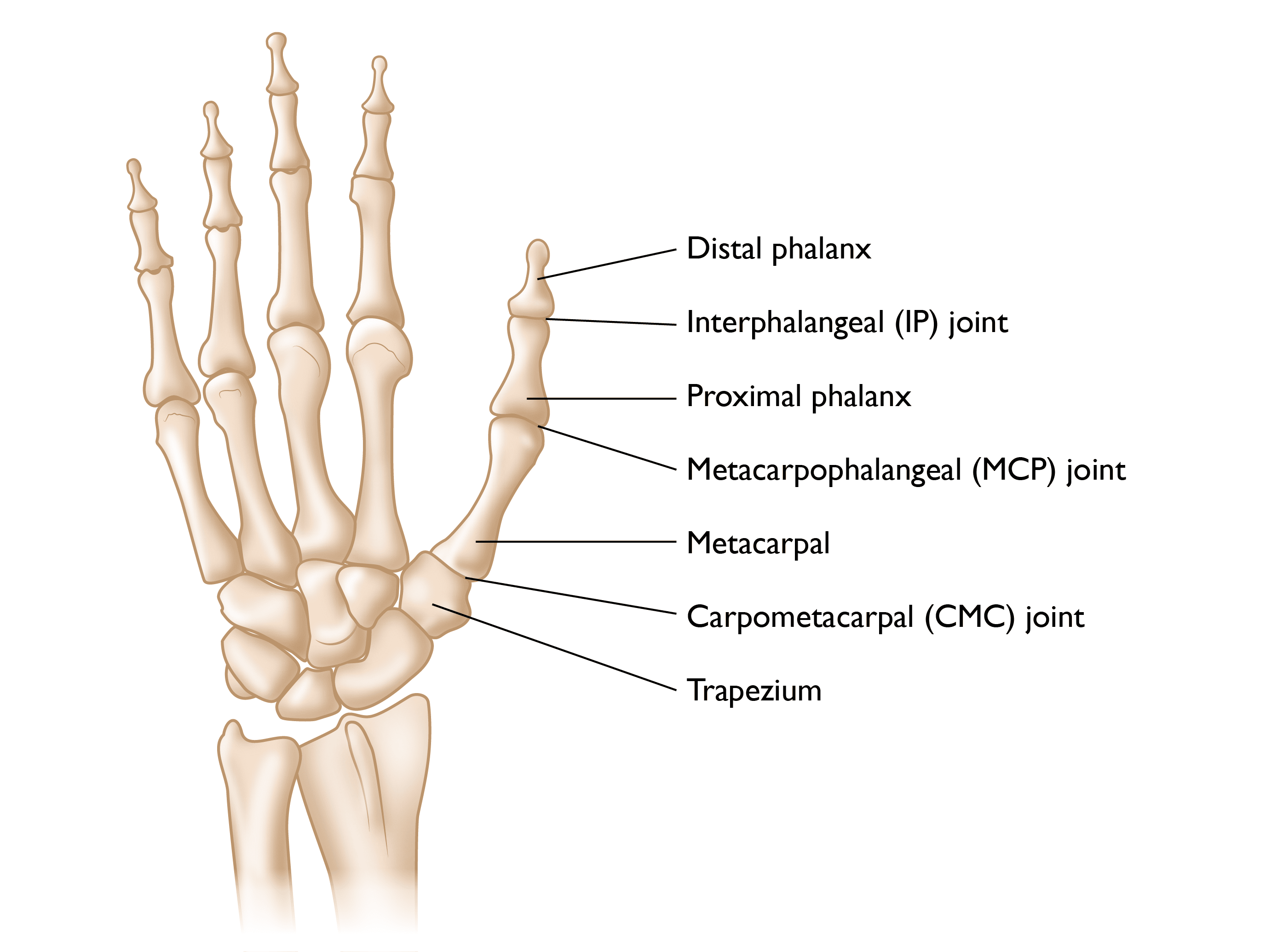
Strong bands of tissue called ligaments surround each thumb joint. They help keep the bones of the joint in proper alignment or position but allow the joint to move. Several muscles help your thumb move in many directions. Nerves give your thumb feeling. Blood vessels bring blood to your thumb to keep it healthy.
Types of Thumb Fractures
Causes of Thumb Fractures
- Thumb fractures are usually caused by a direct injury, such as from a fall or a blow to the hand.
- A thumb fracture may also happen in sports when a ball catches and pulls the thumb back.
- Other fractures can happen from twisting or even from strong muscle contractions. This can happen in wrestling, hockey, football, and skiing.
People with bone disease, such as osteopenia or osteoporosis, have a higher risk of thumb fractures.
Symptoms of a Thumb Fracture
Some symptoms that might suggest your thumb is broken include:
- Pain where the bone is broken
- Swelling
- Trouble moving the thumb or not being able to move it
- Pain when the thumb is touched
- The thumb looking bent, out of place, or not normal
- Numbness or feeling that the thumb is cold
- A thumb joint that feels loose or unstable
Diagnosing a Thumb Fracture
See a doctor as soon as possible if you think you broke your thumb. Waiting too long for treatment can make it harder to put the bones back in the right position. This can affect how well your thumb heals. Until you see a doctor, you can use a padded splint to help keep the bone from moving.
The doctor will examine your thumb, ask how the injury happened, and order X-rays. The doctor will also:
- Check the thumb's soft tissue and nerves to make sure there are no other injuries
- Check the other fingers and the rest of the hand for injuries
- Check the thumb ligaments to make sure they are strong and not injured
Treatment of Thumb Fractures
Nonsurgical Treatment
If the broken bone has not moved very far out of place, or if the break is in the middle of the bone, your doctor may be able to treat it without surgery.
Your doctor may place your thumb in a special cast called a spica cast or a splint to hold the bone in the correct position while it heals. You will likely need to wear the cast or splint for 4 to 6 weeks. During this time, you will need regular X-rays to make sure the bone stays in the correct position.
Surgical Treatment
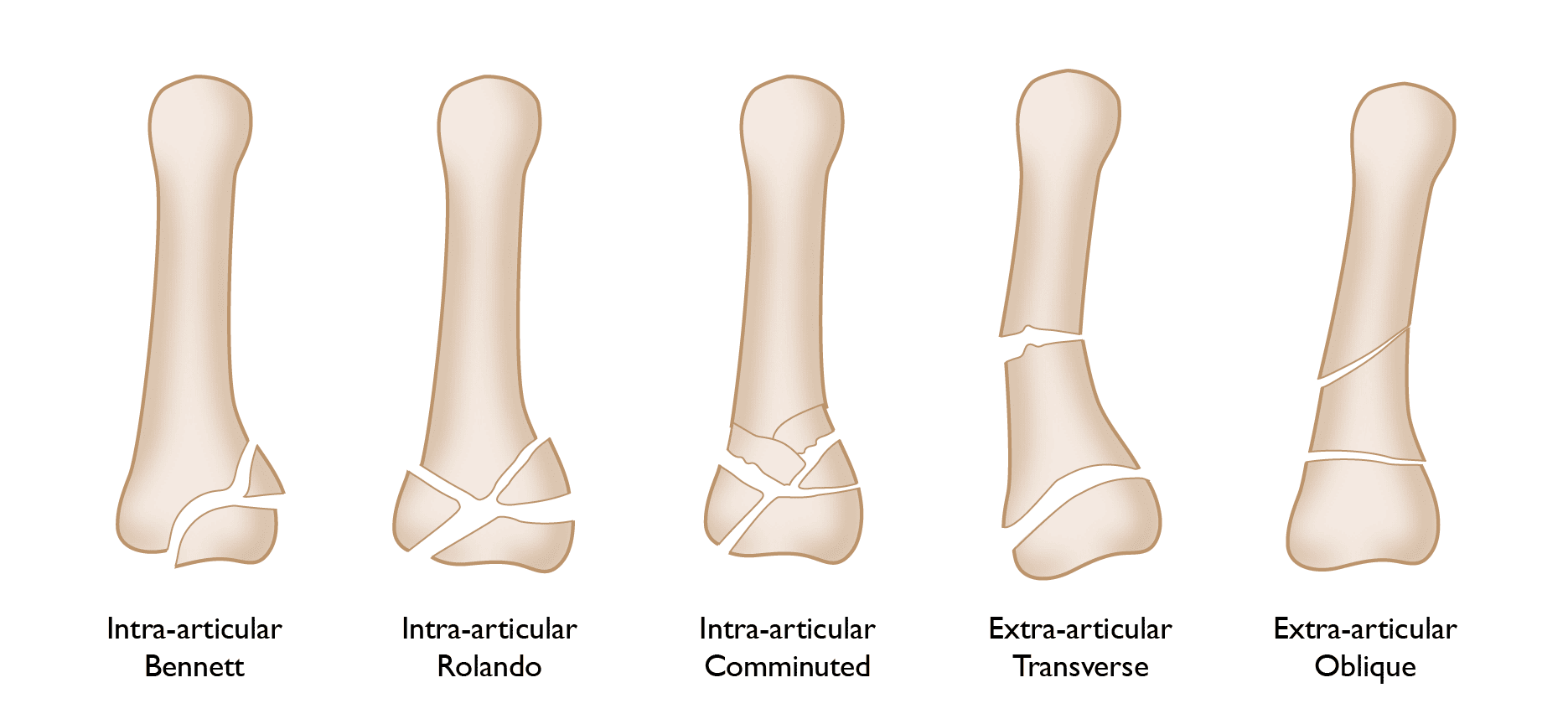
You may need surgery to treat your thumb fracture. This depends on where the break is, whether the bone is in the correct position, and how far the broken pieces have moved. Fractures that involve a joint, such as Bennett and Rolando fractures, almost always need surgery to help the thumb heal properly.
During surgery, your doctor may use special metal hardware to hold the broken pieces of bone in place while they heal. Some of these fixation devices may be pins, plates, or screws.
Each treatment option has benefits and risks. Your doctor will discuss which option is best for your fracture.
You will likely wear a cast or splint for 2 to 6 weeks after surgery. When the cast comes off, your doctor may recommend hand therapy to help you move your hand normally again. It can take 3 months or longer to fully use your hand again, depending on how serious the injury was.
Outcome
Thumb fractures usually heal well when the bones stay in the correct position while they heal. Surgery can have risks, including infection, problems with the wound, or the bones moving out of place. These problems are uncommon but can be serious.
If the fracture involves a joint, you have a higher chance of developing arthritis later in life. This can happen even when the fracture is treated correctly. Arthritis can cause pain and make the joint harder to move. This often happens years after the injury.
After the fracture heals, follow your therapy instructions to help your thumb move normally again. Therapy helps you avoid doing too much too soon, which could move the bone out of place. Doing too little can make your thumb stiff.
Overall, most thumb fractures heal well with the right treatment.
If you play sports, ask your doctor when it is safe to return. Even after your thumb has normal strength and movement, you may need to wear a protective splint for another 6 to 8 weeks to help prevent another injury.
Contributed and/or Updated by
Peer-Reviewed by
AAOS does not endorse any treatments, procedures, products, or physicians referenced herein. This information is provided as an educational service and is not intended to serve as medical advice. Anyone seeking specific orthopaedic advice or assistance should consult his or her orthopaedic surgeon, or locate one in your area through the AAOS Find an Orthopaedist program on this website.
The content on this website may have been translated from English into other languages using artificial intelligence tools. The translations are provided for the convenience of readers and may not been reviewed or verified by medical professionals. AAOS makes no guarantees regarding the accuracy, reliability, or completeness of the translated information and disclaims all liability for any issues arising from its use. Users are strongly encouraged to refer to the original English content and consult qualified healthcare professionals before making any medical decisions. By using the translated content, you acknowledge and accept these limitations and assume full responsibility for any reliance on the information provided.