






Diseases & Conditions
Ganglion Cyst of the Wrist and Hand
Ganglion cysts are the most common mass or lump in the hand. They are not cancerous and, in most cases, are harmless. They can form in many places, but they often appear on the back of the wrist.
These fluid-filled cysts can quickly appear, disappear, and change size. Many ganglion cysts do not require treatment. However, some cysts cause pain, limit movement, or bother you because of how they look. If this happens, you have several treatment options.
Description
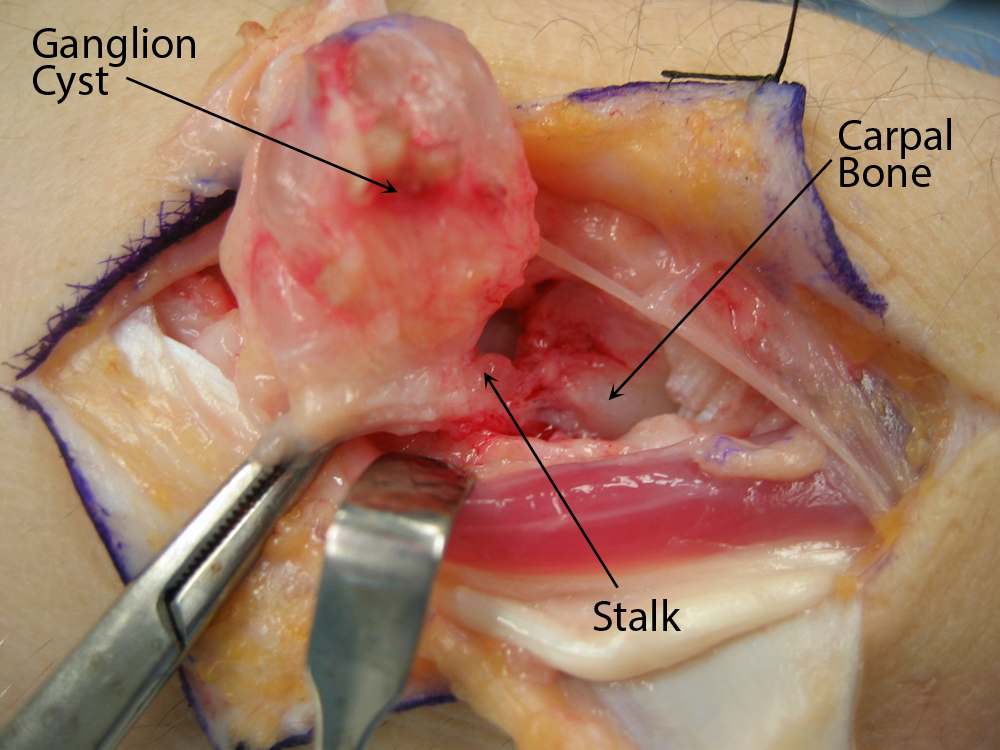
A ganglion cyst arises out of a joint, like a balloon on a stalk. It forms from the tissues around a joint, such as ligaments, tendon sheaths, and joint linings. Inside the balloon is a thick, slippery fluid, similar to the fluid inside your joints.
Ganglion cysts can develop in several of the joints in the hand and wrist, including:
- Both the top and underside of the wrist
- The tip of a finger
- The base of a finger
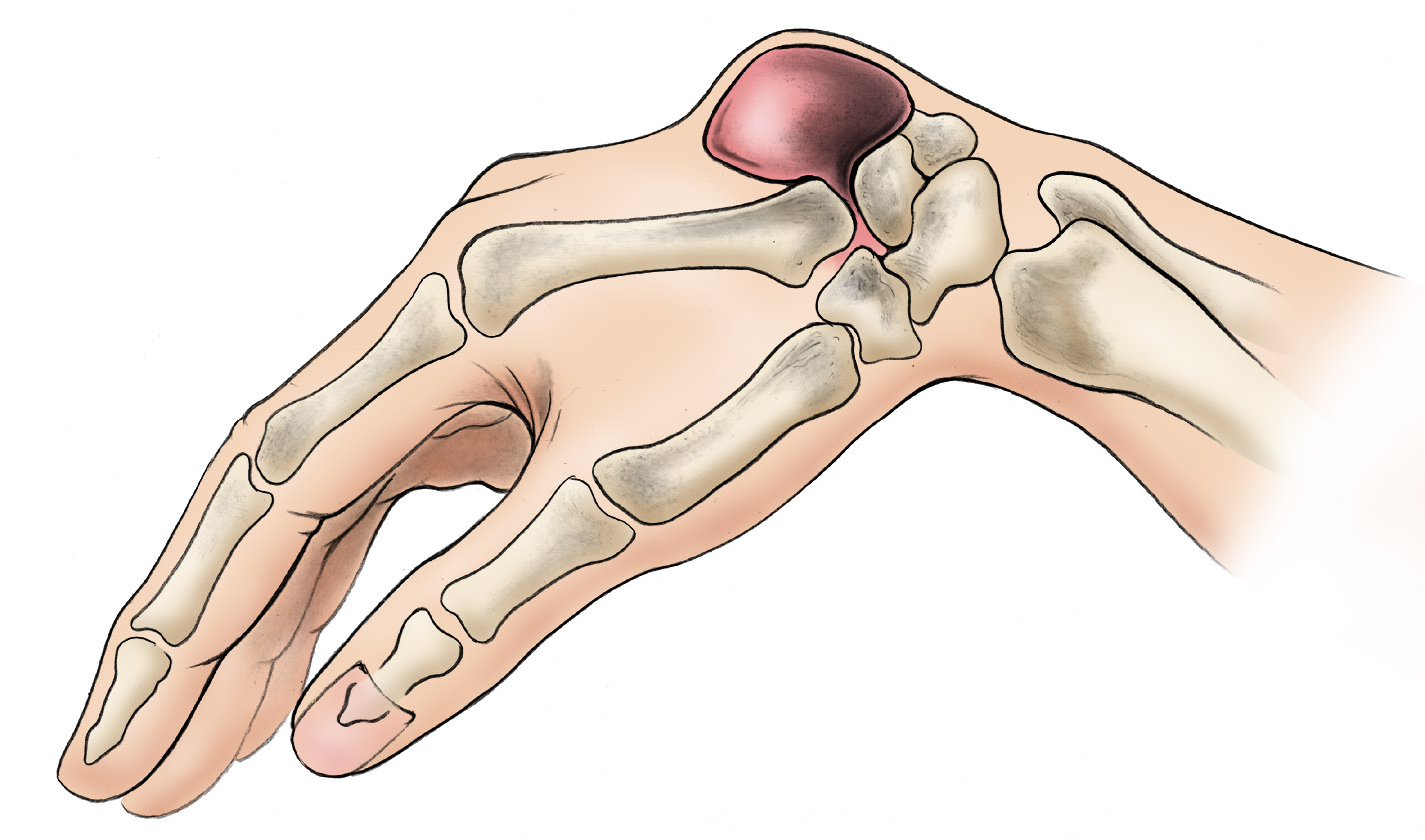
Ganglion cysts vary in size. In many cases, they grow larger with more activity. With rest, the lump usually becomes smaller.
Causes of Ganglion Cysts
Doctors do not know exactly what causes a ganglion cyst to form.
- They are common in younger people between the ages of 15 and 40 and in joints that have arthritis.
- Women are more likely to be affected than men.
- They are common among gymnasts, who repeatedly apply stress to the wrist.
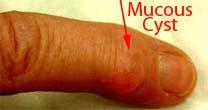
- Mucous cysts are ganglion cysts that develop at the end joint of a finger. They are linked with arthritis in the finger joint. They are most common in women between the ages of 40 and 70.
Symptoms of a Ganglion Cyst
Most ganglions form a visible lump. But smaller cysts, called occult ganglions, stay hidden under the skin. Many ganglion cysts cause no other symptoms besides a visible lump. But if a cyst puts pressure on the nerves that pass across the joint, it can cause pain, tingling, and muscle weakness.
A large cyst may bother you because of how it looks. This can happen even if the cyst does not hurt.
Diagnosing a Ganglion Cyst
Medical History and Physical Examination
In most cases, your doctor can diagnose a ganglion cyst from a physical exam. It is rare to need more testing. Your doctor may order more tests if they are concerned about a different problem, such as an infection or a tumor.
At your first appointment, your doctor will ask you about your medical history and symptoms. They may ask you:
- How long you have had the cyst
- Whether it changes in size
- Whether it is painful
Physical Examination
Your doctor may apply pressure on the cyst to check for tenderness or discomfort. If your doctor can easily feel the lump, they may shine a light against it. This test is called transillumination. Ganglion cysts let light pass through because they are filled with fluid. Solid tumors do not. This simple test is often enough to confirm the diagnosis.
Imaging Tests
Sometimes the diagnosis is not clear from the exam alone. For example, you may have wrist pain but no obvious lump. In these cases, your doctor may order imaging tests.
Some imaging tests include the following:
Ultrasound. This test is quick and can often be done in the office. It can show a fluid-filled cyst with clear borders. It can also help tell a ganglion cyst apart from a solid tumor.
Magnetic resonance imaging (MRI) scans. An MRI can find a hidden ganglion cyst that cannot be seen or felt. This is called an occult ganglion. MRI is very accurate at finding these hidden cysts. On an MRI, a ganglion cyst usually looks like a smooth, well-defined, fluid-filled mass. Sometimes a thin stalk connects the cyst to the joint.
X-rays. X-rays create clear pictures of bone. Although X-rays do not show the fluid-filled mass, they can show associated problems, like changes in the joint due to arthritis. Your doctor may also use them to rule out other conditions, including arthritis or a bone tumor.
Treatment of Ganglion Cysts
Nonsurgical Treatment
Initial treatment of a ganglion cyst is nonsurgical.
Observation. If you have no pain or other symptoms, your doctor may suggest watching the cyst over time. This approach is safe. Ganglions are not cancerous, and more than half go away on their own.
Immobilization. Activity sometimes makes the ganglion grow larger. This can put more pressure on nearby structures and cause pain. A wrist brace or splint may help symptoms, and sometimes the cyst will shrink.
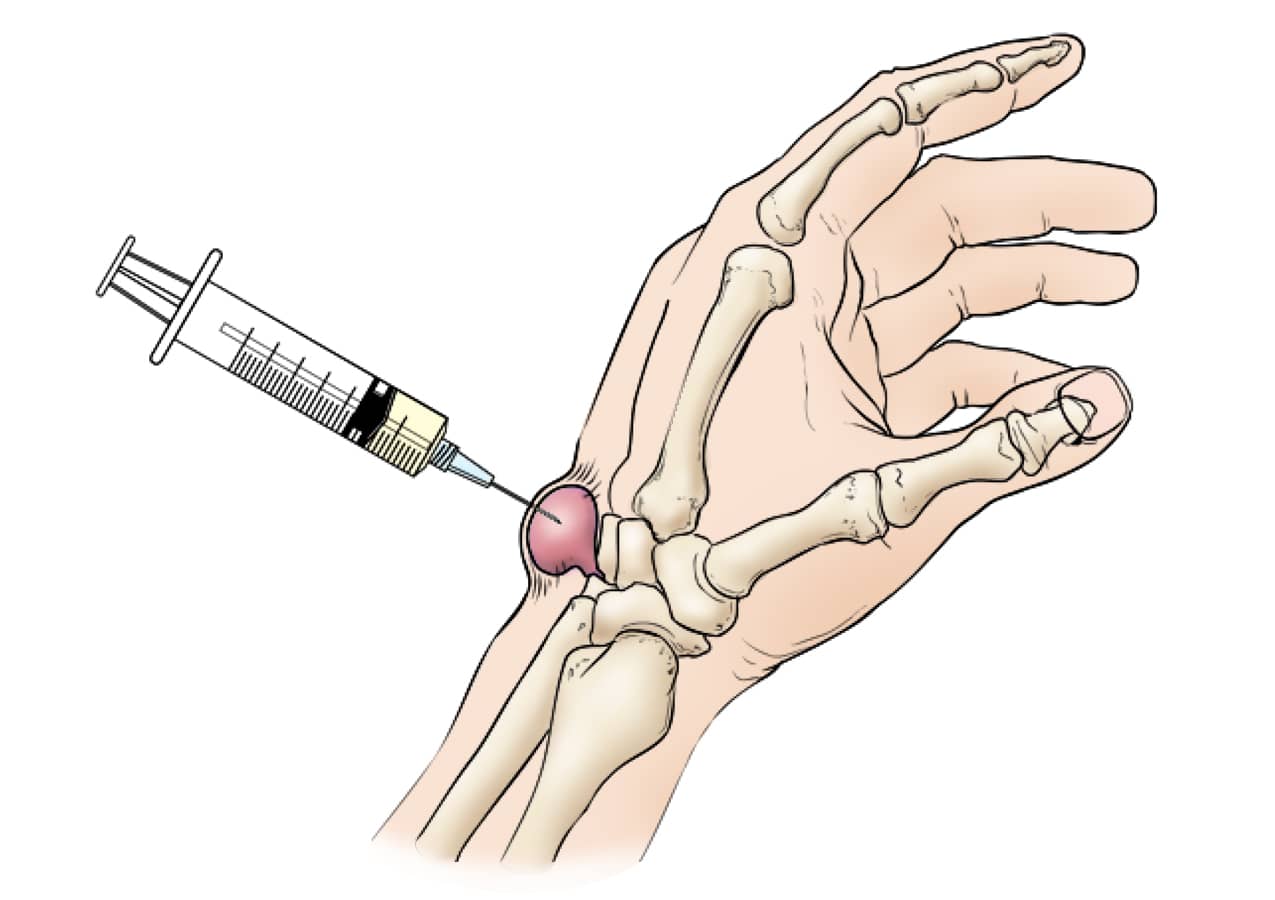
Aspiration. If the ganglion cyst causes a great deal of pain or limits activities, or if there is any question about the diagnosis, your doctor may drain the fluid from it using a needle. This procedure is called an aspiration.
Doctors most often use aspirations for cysts on the top of the wrist. Ganglion cysts on the palm side of the wrist can be harder to aspirate because they lie close to major vessels and nerves.
Unfortunately, aspiration often fails to get rid of the cyst completely. This happens because the root or connection to the joint or tendon sheath is left behind. A ganglion can is like a weed, which will grow back if the root is not addressed. Even if a ganglion cyst is addressed with surgery, it very often comes back.
Surgical Treatment
Your doctor may recommend surgery if nonsurgical treatment does not relieve your symptoms.
The procedure to remove a ganglion cyst is called an excision.
In an excision, the doctor removes the cyst along with the stalk it grows from. This may mean removing part of the joint capsule or tendon sheath to make sure the root is gone. Even after excision, there is a good chance the cyst will return.
Excision is usually an outpatient procedure, meaning patients go home the day of surgery after a period of resting in the recovery area. You may have some tenderness, discomfort, and swelling after surgery. Most people return to normal activities 2 to 6 weeks after the procedure.
Treatments to Avoid
Avoid hitting the cyst with a book or other heavy object to break the cyst. Because of this old home remedy, a cyst is sometimes called a "Bible bump." Hitting the cyst with a heavy object can injure your hand and is unlikely get rid of the cyst.
Outcomes
Ganglion cysts rarely, if ever, cause permanent disability. They are safe to leave alone, but sometimes patients have the cyst aspirated or removed. It is common for cysts to come back after an aspiration or surgical removal.
Contributed and/or Updated by
Peer-Reviewed by
AAOS does not endorse any treatments, procedures, products, or physicians referenced herein. This information is provided as an educational service and is not intended to serve as medical advice. Anyone seeking specific orthopaedic advice or assistance should consult his or her orthopaedic surgeon, or locate one in your area through the AAOS Find an Orthopaedist program on this website.
The content on this website may have been translated from English into other languages using artificial intelligence tools. The translations are provided for the convenience of readers and may not been reviewed or verified by medical professionals. AAOS makes no guarantees regarding the accuracy, reliability, or completeness of the translated information and disclaims all liability for any issues arising from its use. Users are strongly encouraged to refer to the original English content and consult qualified healthcare professionals before making any medical decisions. By using the translated content, you acknowledge and accept these limitations and assume full responsibility for any reliance on the information provided.